Woodstock or Dreamboat Annie? Alameda, WETA, and the little ferry with no backup
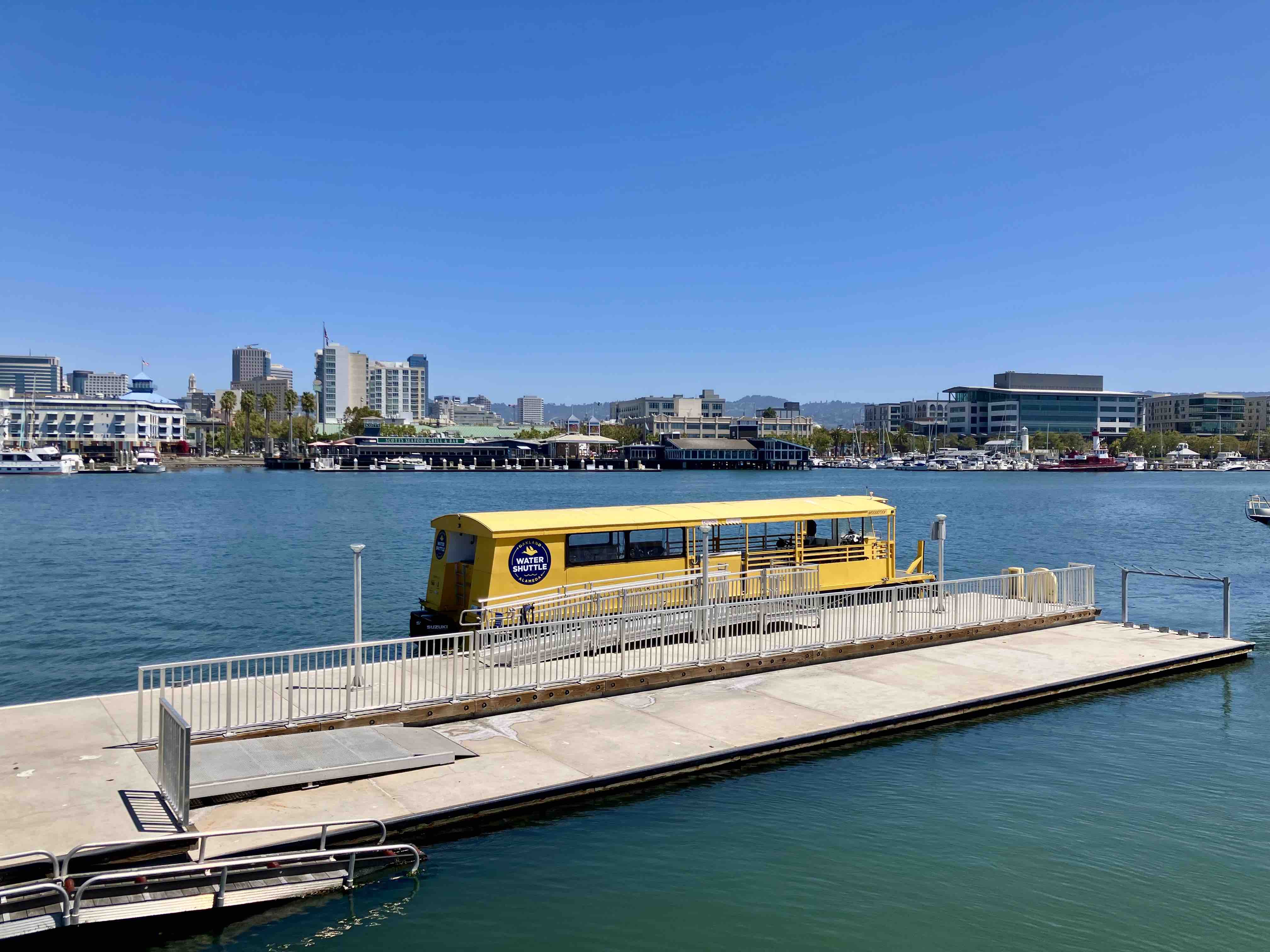
You are no good at your job if you skip contingency planning and ignore the experience of the people who use your product or service.
Ahoy, mate! I'm hiring. I'm launching a swimming school...
I live on an island. Two years ago, my city and some partners launched a little ferry. At an annual cost in the million-dollar range, a single boat makes the 5-minute trip to the mainland. It's more performance than substance, like so many San Francisco Bay Area public transit projects.
There are no particularly large employers left in the City of Alameda, but you can't reach an office job on the mainland with this ferry. It doesn't run on Mondays. Initially, it didn't run on Mondays or Tuesdays.
Maybe you work for one of the few restaurants or bars still open in the Port of Oakland's largely vacant Jack London Square retail development. You can't use this ferry either. The last boat home leaves at 19:41 Tuesday through Thursday, and 21:25 on weekends, well before last call.
Oakland-based workers who want to commute in the opposite direction are likewise out of luck. The Target department store and the Safeway supermarket within walking distance of the Alameda pier stay open until 22:00 and 24:00, respectively.
To add insult to injury, the little ferry has been out of service for 2 weeks. One of the boat's two outboard (external), off-the-shelf engines failed. The spare, apparently untested, failed immediately.
If the Water Emergency Transportation Authority, also known as San Francisco Bay Ferry, can't fix a 31-person pleasure boat in 2 weeks, it won't be able to manage the maintenance demands bound to follow in the wake of a real emergency like an earthquake. WETA now oversees most of the big ferry routes that cross the San Francisco Bay.
Despite their masters' degrees, City of Alameda transportation staffers never planned for alternatives. You won't find a map to bus stops or a good explanation of which of 5 bus routes to choose. The little ferry was free but bus fare is $3 cash each way. A bargain for a longer trip, that's steep for a 5-minute ride through an underwater tube/tunnel. No arrangements were made for bus vouchers.
Whatever your profession, you are no good at it if you skip contingency planning and ignore the experience of the people who use your product or service. Now you can see why I, working as a cloud infrastructure engineer, held out for four servers, instead of just a third, after a two-node AWS ElastiCache Redis cluster became saturated. When two nodes are needed to handle demand, temporary unavailability of a single node — an event that is not only foreseeable but also routine for this AWS-managed data caching service — leaves a three-node cluster with no extra capacity. I won't tolerate that for my users.
Certified swimming instructors: The mission of the Woodstock Exceptional Transportation Swimming Academy (WETSA) is to teach people to swim between Alameda and Oakland when the little ferry isn't running. Stay tuned for a link to the job application, which will be hosted by Workday. Like most jobs advertised on LinkedIn, this is a ghost job.
Update: Ferry service resumed after 3 weeks. WETA and the City of Alameda never responded to my requests that they provide detailed information for ferry riders not familiar with the bus and cover people's bus fare when the free ferry fails. Instead, they are "investigating potential funding sources to cover [...] a back-up boat." When you're a hammer, everything looks like a nail.
Thanks for reading, and for thinking. Feel free to comment on the original LinkedIn post...